
Views: 0 Author: Site Editor Publish Time: 2026-06-06 Origin: Site


Production demands have shifted dramatically across the media landscape over the last decade. Creators, corporate communicators, and live event producers now require studio-grade audio without the restrictive physical boundaries of static setups. Securing flawless vocal presence on the move is no longer optional. Traditional boom and shotgun setups require dedicated operators and pristine room acoustics to capture clear sound reliably. Conversely, standard wired lavaliers severely limit subject mobility, tethering talent to a console and introducing constant tripping hazards on busy sets.
The modern Lapel Wireless Microphone has fundamentally solved this challenge. It has become the baseline standard for modern video and live audio production. The system expertly bridges the gap between acoustic proximity, necessary visual discretion, and absolute subject mobility. In this article, you will explore the core technical advantages and implementation strategies behind these systems. We will show you why upgrading your audio capture workflow makes a noticeable difference in final production quality.
Consistent Audio Levels: Securing the microphone capsule on the subject maintains a fixed distance to the sound source, standardizing audio levels even when the subject moves or turns their head.
Unrestricted Mobility: Wireless transmission eliminates cable runs, essential for dynamic framing, on-stage presentations, and multi-subject interviews.
Acoustic Isolation: Omnidirectional lapel capsules placed close to the mouth naturally yield a higher signal-to-noise ratio, mitigating poor room acoustics and ambient bleed.
Modern Technical Reliability: Current 2.4GHz digital and UHF wireless protocols have matured, offering extremely low latency, verifiable signal encryption, and robust battery life suitable for commercial deployment.
Acoustic physics dictate audio clarity on any set. The distance between the microphone and the sound source remains your most critical variable. Boom microphones are highly susceptible to shifting subject distances. Active booming is strictly required to maintain a steady signal-to-noise ratio. If the talent leans back unexpectedly, the audio level drops dramatically. The room's natural reverberation instantly becomes more prominent in the mix. Furthermore, boom operators fight serious physical fatigue over long shoot days.
Handheld mics present an entirely different problem. They disrupt visual aesthetics severely. A large dynamic microphone blocks the talent's face and limits a speaker's hand gestures. They look overly broadcast-heavy for casual interviews or cinematic documentary formats. Natural body language vanishes when talent must grip a microphone.
The lapel advantage lies in its physical placement. A Lapel Wireless Microphone systematically eliminates these acoustic issues. It physically locks the small capsule six to eight inches from the sound source. You capture the direct sound wave instantly before it bounces off walls. Reflections have no time to interfere. You get unmatched acoustic proximity without sacrificing the visual flow of the scene.
Your primary success criteria involve attaining a "dry" vocal recording. This means capturing minimal room reverb and ambient bleed. You achieve this pristine isolation while keeping the microphone virtually invisible in the final camera frame. Proper clip placement guarantees standard, broadcast-ready audio levels regardless of how the talent moves across the stage.
Modern productions demand incredible setup speed and seamless scalability. Every minute spent troubleshooting audio cables wastes valuable daylight. Modern wireless receivers can route two or more lapel transmitters directly into a single camera or audio interface. You bypass complex external mixers entirely. This creates a lean, highly efficient workflow for small production crews.
We heavily favor omnidirectional lapel mics for these wireless setups. Directional cardioid capsules reject sound from the rear. If talent turns their head to address someone else, a cardioid capsule loses the voice completely. Omnidirectional capsules pick up sound spherically. The volume stays perfectly even during natural head turns. They are incredibly forgiving of sudden clothing shifts. You capture natural, uncolored dialogue effortlessly.
Internal recording redundancy represents a massive leap forward. Digital clipping or radio interference can ruin great takes forever. Advanced transmitters now feature onboard storage capabilities. Many utilize 32-bit float internal recording as an ultimate fail-safe. This format captures an enormous dynamic range using dual analog-to-digital converters. Whispers and loud shouts record perfectly without any manual gain adjustments.
Consider these core architectural benefits when designing your audio workflow:
Route multiple transmitters instantly into one compact receiver.
Bypass bulky field mixers to increase camera mobility.
Utilize omnidirectional capsules to normalize head-turn volume drops.
Deploy 32-bit float internal recording to prevent unexpected clipping.
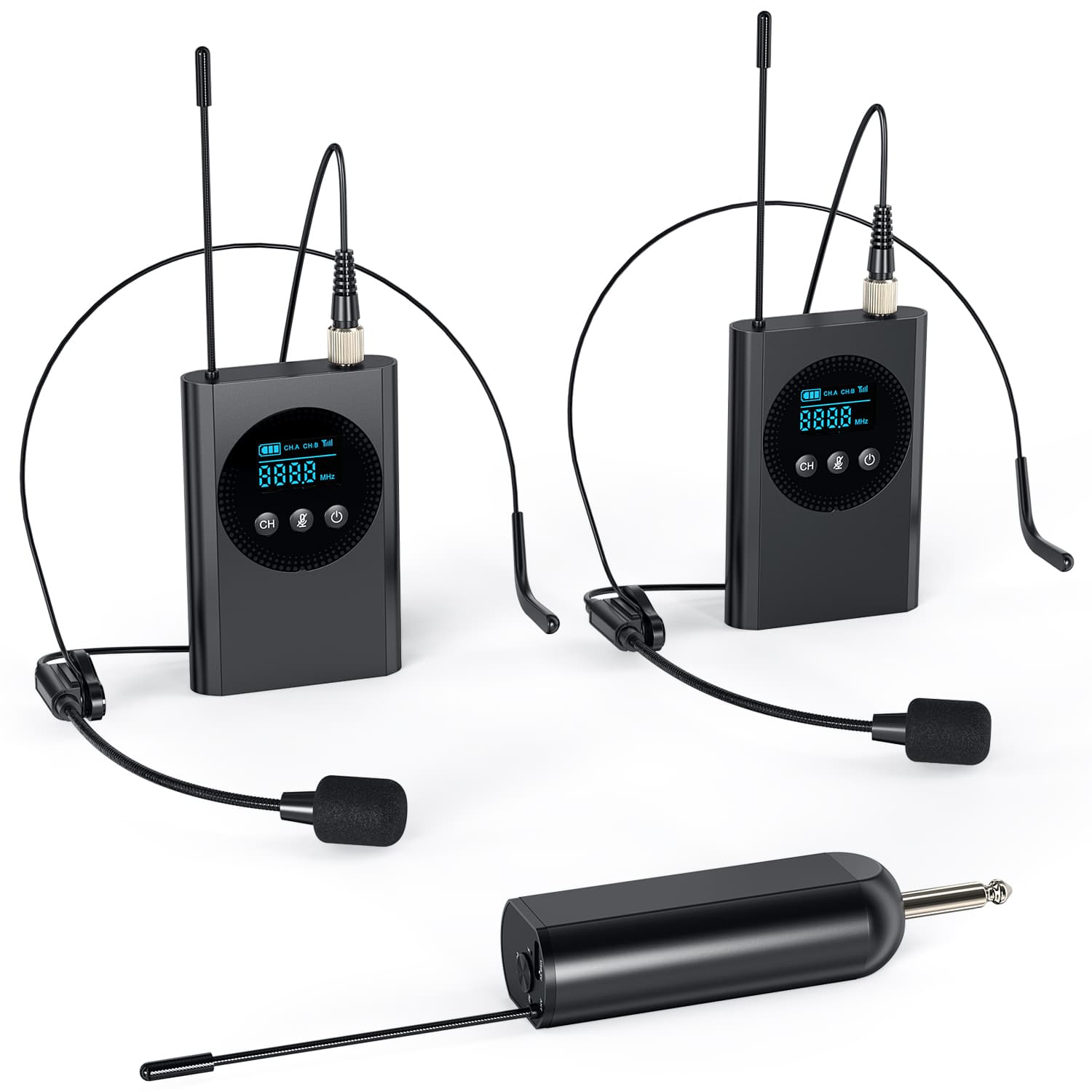
Choosing the correct transmission protocol dictates your signal reliability. The 2.4GHz digital spectrum offers license-free global operation. It uses automatic frequency hopping to dodge sudden Wi-Fi or Bluetooth interference. The system constantly scans the environment and moves your audio signal to clean channels. We recommend 2.4GHz digital systems heavily for clear line-of-sight environments. They excel in controlled studios or open outdoor fields.
Traditional UHF behaves quite differently. UHF wavelengths are longer, allowing them to penetrate walls and human bodies effectively. Live event producers rely entirely on UHF for complex structural environments. Partitioned conference centers and specific church architectures block 2.4GHz signals quickly. UHF requires dedicated frequency coordination. You must scan the local airspace and lock onto clean channels manually before rolling cameras.
Wireless Transmission Protocol Comparison | |||
Protocol Type | Ideal Environment | Key Technical Benefit | Licensing Requirement |
|---|---|---|---|
2.4GHz Digital | Studios, Open Line-of-sight | Automatic frequency hopping | None (Global Operation) |
UHF (Ultra High Frequency) | Live Venues, Obstructed areas | Superior obstacle penetration | Varies heavily by region |
Evaluating the critical latency threshold is vital for video sync. Acceptable systems must perform well under the 5-millisecond latency mark. One single frame of video at 24 frames per second lasts roughly 41 milliseconds. A 5ms audio delay remains completely undetectable to human eyes. Staying under this strict limit prevents phasing issues or obvious lip-sync discrepancies in post-production.
Security and compliance matter deeply in sensitive spaces. Legal depositions, medical panels, and corporate board meetings demand absolute privacy. Digital wireless systems natively utilize 128-bit or 256-bit Advanced Encryption Standard (AES). This scrambling effectively prevents unauthorized interception of sensitive conversations. You guarantee client confidentiality over the airwaves.
Cable microphonics and clothing rustle destroy otherwise perfect recordings. They represent the primary physical risk on any set. Mitigation relies entirely on proper mounting techniques rather than the microphone hardware itself. You must isolate the capsule carefully from stiff fabrics and jewelry.
The Broadcast Loop: Loop the cable into a small U-shape near the capsule to absorb downward tension.
Medical Tape Isolation: Tape the loop securely to the talent's chest using specialized hypoallergenic tape.
Furry Undercovers: Use dedicated sticky undercovers to create a soft buffer between the capsule and the shirt.
Clean Routing: Route the main cable cleanly down the subject's back to prevent arm-swing interference.
Battery lifecycle management requires strict attention. Built-in lithium-ion batteries degrade slowly over hundreds of charge cycles. Production planning must account for realistic field conditions. You usually get 70-80% of the stated maximum battery life when operating in extreme temperatures. Always deploy modular charging cases to replenish your transmitter units between takes. Never let lithium-ion batteries sit completely drained in storage.
Operating in dense environments introduces serious drop-out risks. Trade shows, metropolitan hubs, and crowded arenas are notoriously saturated with competing radio signals. Pre-shoot frequency scanning is absolutely mandatory. You must establish and maintain a clean line-of-sight between transmitters and receivers whenever possible. Elevating your receivers above head height on light stands drastically improves signal reception.
Matching equipment to your actual operating environment streamlines your workflow. Solo creators and run-and-gun shooters demand extreme portability and ease of use. They should prioritize dual-channel 2.4GHz systems. Look closely for internal backup recording features and magnetic mounting options. Unified charging cases keep small crews moving fast. The lack of manual frequency tuning saves precious setup time.
Corporate broadcasters and professional interviewers need highly discrete visuals. Focus on systems utilizing discrete sub-miniature lapel capsules. These tiny microphones blend invisibly into high-end wardrobe choices. Professional systems should feature locking 3.5mm or TA4F connectors. These prevent accidental cable unplugs when talent sits down. Fine-gain control directly on the receiver is critical. It allows you to balance diverse voice types accurately before the signal hits the camera.
Live venues and houses of worship demand uncompromising signal stability over long distances. Default to professional UHF systems here. They handle complex staging areas and dense audiences effortlessly. Look for rack-mountable receivers that integrate directly into the house audio console. True-diversity antennas switch seamlessly to the strongest incoming signal, eliminating micro-dropouts as speakers pace the stage.
Cost-to-performance ratios matter greatly when outfitting a crew. Avoid sub-$50 consumer units for any commercial work. They utilize unshielded cables and introduce unacceptable high noise floors into your audio mix. A slight hiss ruins an otherwise intimate interview. Prioritize mid-tier to professional systems instead. They offer modular replacement parts, robust warranties, and verifiable signal integrity. Quality audio capture always justifies the initial equipment investment.
We strongly prefer the lapel wireless microphone because it systematically removes uncontrolled variables from the production day. It guarantees consistent vocal presence regardless of staging or complex camera moves. It frees the subject physically, allowing for natural gestures and relaxed performances. This specific technology dramatically speeds up the entire set workflow, proving indispensable for modern crews.
Audit your current production environments immediately. Analyze whether you shoot primarily in open studios or obstructed field locations. Determine whether a 2.4GHz digital or a UHF-based lapel system best aligns with your daily deployment needs. Train your crew on proper mounting techniques to eliminate clothing rustle. Invest wisely in a reliable wireless ecosystem to secure pristine audio on every single take.
A: Historically, analog wireless systems used companders that slightly affected dynamic range. Modern uncompressed digital wireless systems transmit lossless audio. This makes the difference virtually imperceptible in standard production environments. You gain absolute mobility without sacrificing acoustic fidelity.
A: Select a system featuring automatic frequency management. These intelligent models hop channels dynamically to avoid sudden interference. If you use UHF systems, perform a rigorous manual frequency scan prior to the event. This allows you to lock onto clear channels reliably.
A: Yes, provided they operate on distinct, coordinated frequencies. Digital systems are specifically engineered to manage multiple distinct pairings without cross-talk. Always check the manufacturer's maximum simultaneous system limit before planning large multi-mic setups.
A: If you maintain direct line-of-sight within 100 meters, 2.4GHz is highly reliable and requires no licensing. If shooting across varied terrain with physical obstructions between the talent and camera, UHF is technically superior for penetrating obstacles and maintaining signal stability.


